Bonding agents are commonly used when new construction material must adhere effectively to an existing substrate. Two categories frequently considered are epoxy and acrylic bonding agents, but they are not interchangeable in every situation.
Understanding their basic differences helps contractors and project teams choose more appropriately.
What Are Epoxy Bonding Agents?
Epoxy bonding agents are resin-based products generally used where strong adhesion and demanding performance characteristics are required.
Depending on the formulation, they may be considered for applications such as:
- Bonding new concrete to existing concrete
- Structural repair work
- Repair mortar applications
- Industrial repair situations
- Bonding on properly prepared substrates
Epoxy systems often involve two components that must be mixed in the manufacturer's specified ratio.
Correct mixing and application timing are particularly important because these products have a defined working or pot life.
What Are Acrylic Bonding Agents?
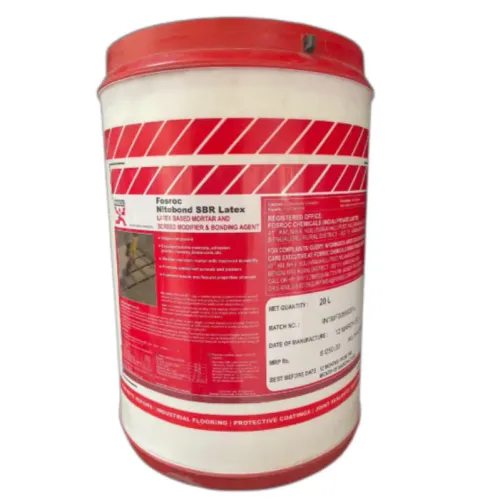
Acrylic bonding agents are generally polymer-based products used to improve adhesion in cementitious applications.
Depending on the specific product, common uses may include:
- Plaster repairs
- Mortar modification
- Patch repairs
- Screeds
- Cement-based repair work
- Improving bonding between suitable surfaces
They can be practical for general repair and renovation applications where the selected acrylic product is compatible with the substrate and repair material.
Epoxy or Acrylic: How Should You Decide?
Rather than asking which category is universally better, compare them according to the application.
Performance requirement: More demanding bonding or repair applications may call for a specialized epoxy system.
Type of substrate: The existing surface and new material influence product selection.
Site condition: Moisture, temperature, contamination, and surface condition can affect suitability.
Application method: Some products require precise mixing, controlled application thickness, or specific preparation.
Repair objective: General plaster repair and structural bonding are very different tasks and should not automatically use the same product.
Surface Preparation Is Critical
Whether epoxy or acrylic is selected, the substrate must usually be sound and properly prepared.
Loose concrete, dust, laitance, oil, paint, weak plaster, or other contaminants can prevent proper bonding.
The exact preparation method should follow the manufacturer's recommendations.
Finding Bonding Agents in Pune
Contractors and repair professionals in Pune often require bonding materials for new construction as well as renovation and rehabilitation work.
CMC Corporation supplies construction materials for different project requirements, including bonding-related product categories. Buyers should specify whether the requirement involves concrete, plaster, mortar, screed, or another substrate before selecting a product.
Make the Decision Based on Technical Requirements
Epoxy systems may offer advantages for certain demanding applications, while acrylic bonding agents can be suitable for many cementitious repair and modification requirements.
The correct choice depends on the project—not simply on which product sounds more advanced.
Review the technical data sheet, substrate requirements, mixing instructions, application conditions, and compatibility before purchasing. That process helps ensure the bonding agent selected for a Pune construction or repair project matches the actual work being carried out.
Keywords